Best Miter Saw Blades for Wood: Ultra-Fine Finish and Clean Crosscuts
Miter saw blades designed for wood vary by tooth count, kerf, and material. This guide highlights five top options that balance fine finishes with dependable durability. Each blade is suitable for common wood types and provides smooth, accurate cuts for trim, molding, and cabinetry projects. The selections emphasize thin kerfs for reduced waste and precision, making them ideal for American workshop settings.
| Product | Brand | Teeth | Diameter | Arbor | Notes |
|---|---|---|---|---|---|
| WEN BL1080 10-Inch 80-Tooth Ultra-Fine Finish | WEN | 80 | 10 inch | 5/8 inch | Ultra-thin kerf for clean cuts; high RPM compatibility |
| WEN BL1060 10-Inch 60-Tooth Fine-Finish | WEN | 60 | 10 inch | 5/8 inch | Fine finish option with solid performance |
| WEN BL1280 12-Inch 80-Tooth Fine-Finish | WEN | 80 | 12 inch | 1 inch | Larger diameter for deeper crosscuts; thin kerf |
| FOXBC 12 Inch 80 Tooth Fine Finish | FOXBC | 80 | 12 inch | 1 inch | Laser-cut stabilizers reduce vibration; ATB grind |
| Diablo D1280X 12″ 80T Fine Finish | Diablo | 80 | 12 inch | 1 inch | Hi-Density carbide for durability; precise crosscuts |
Introduction note: Below are five blades with strong crosscut performance, designed to deliver clean edges with minimal tear-out. Each entry includes a concise overview of design features and how they support precise woodworking tasks.
WEN Ultra-Fine Finish 10-Inch Blade

The WEN BL1080 features a 10-inch diameter, a 5/8-inch arbor, and a high RPM rating up to 6000. With an ultra-thin kerf of 1/10 inch (2.4 mm), it enables clean, efficient cuts in both softwoods and hardwoods, reducing waste and improving finish quality for trim and finish work.
WEN Fine-Finish 10-Inch Blade
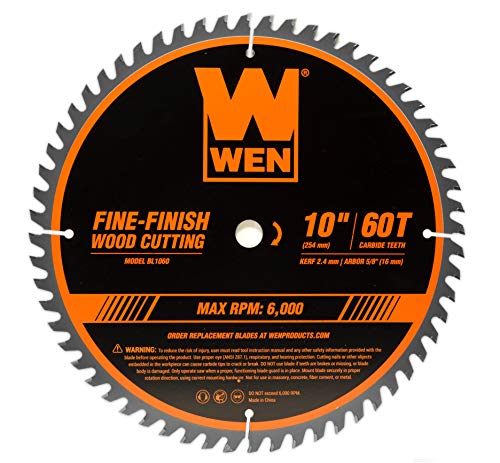
The BL1060 offers a 10-inch diameter with a 5/8-inch arbor and a 6,000 RPM rating. Its 1/10-inch kerf preserves material integrity while delivering clean crosscuts, making it a reliable option for finish-grade cuts in various woods.
WEN 12-Inch Fine-Finish Blade
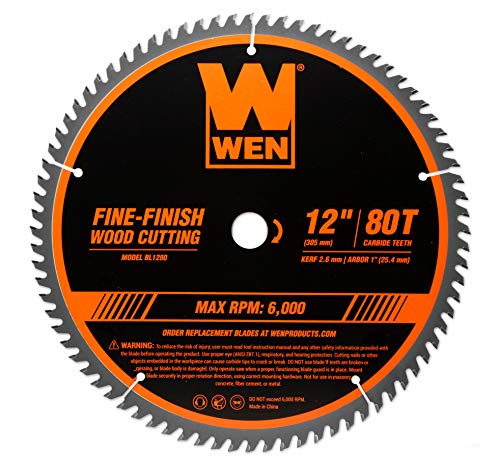
The BL1280 is a 12-inch blade with an 80-tooth count and a 1-inch arbor. It maintains a 6,000 RPM rating and uses a thin kerf of about 2.6 mm. This blade is well-suited for wide boards and finishing tasks where a finer cut is expected across larger stock.
FOXBC 12-Inch 80T Fine Finish Blade

FOXBC’s 12-inch blade uses 80 teeth with a 1-inch arbor and a 0.118-inch kerf. The ATB grind and laser-cut stabilizer vents help reduce noise and vibration, promoting cooler operation and steadier cuts with a smooth finish for fine woodworking projects.
Diablo 12″ 80T Fine Finish Blade
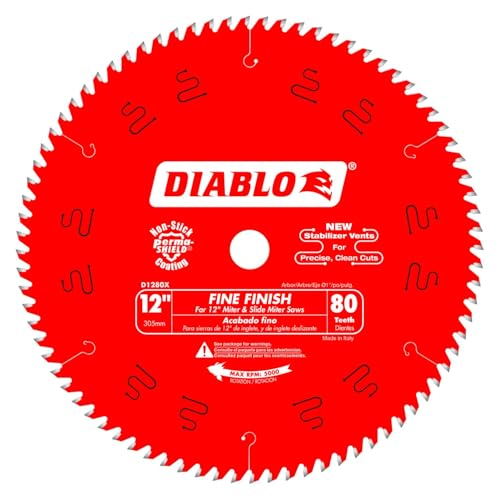
Diablo’s D1280X is designed for hardwoods and softwoods, delivering precise, clean finishes. The TiCo Hi-Density carbide enhances durability and performance across repeated crosscuts, ensuring consistent results in finish work.
Buying Guide
Key considerations when selecting a miter saw blade for wood include blade diameter, arbor size, tooth count, kerf width, and blade material. Higher tooth counts (such as 80T) typically yield smoother finishes on crosscuts but may cut slightly slower than lower-tooth blades. A thinner kerf minimizes material loss and reduces power draw, which is beneficial for trim and finish work. The arbor compatibility must match your saw (most common are 5/8 inch and 1 inch). For projects involving fine trim, cabinet work, or molding, an 80T blade from reputable brands often provides the best balance of finish quality and durability. For thicker stock or faster rough cuts, a 60T blade offers more aggressive cutting, though with a rougher edge. Consider blade construction (Hi-Density carbide vs standard carbide) for long-term wear resistance, especially under frequent use or challenging woods.
Material and grind type also influence outcomes. Alternate Top Bevel (ATB) geometry helps reduce tear-out on end grains, while laser-cut stabilizers can minimize vibration and blade warp, improving cut accuracy. When choosing between 10-inch and 12-inch blades, remember that larger diameters are capable of deeper crosscuts but require compatible machinery and cut depth. Finally, assess user needs: precision finishing for cabinetry, or general-purpose crosscuts for shop projects. A balanced selection covers both general use and finer finish tasks.