Best Carbide Reciprocating Saw Blades for Tough Jobs
When cutting through hard metals, thick wood, or demolition tasks, carbide-tipped reciprocating saw blades offer superior life and performance. This guide highlights five top performers, comparing design features, durability, and cutting efficiency. Use these blades for metal fabrication, demolition, pruning, and heavy-duty remodeling projects where standard bi-metal blades fail or wear quickly. Each product below includes practical strengths to help you choose blades that minimize downtime and maximize cutting speed while maintaining control and safety on the job.
| Product | Material Focus | Teeth Per Inch | Pack Size |
|---|---|---|---|
| EZARC R678HM Endurance | Thick metal | 8 TPI | 3-pack |
| EZARC R956HM Endurance | Wood and metal demolition | 6 TPI | 3-pack |
| Diablo DS0903CP3 Demo Demon | Pruning and clean wood | 3 TPI | 3-pack |
| Diablo DS0908CF Steel Demon | Thick metal | 8 TPI | 1-pack |
| HARDWIN 6″ 8 TPI | Hard metals | 8 TPI | 3-pack |
All blades shown here feature carbide tips designed to outlast traditional bi-metal options, helping professionals work through harder materials with less frequent blade changes. When selecting a blade, consider the material you’ll encounter, the required cut speed, and how the blade’s construction manages heat and friction. The following sections profile each product, then provide a buying guide to help you match blades to your specific tasks.
EZARC R678HM Endurance for Thick Metal
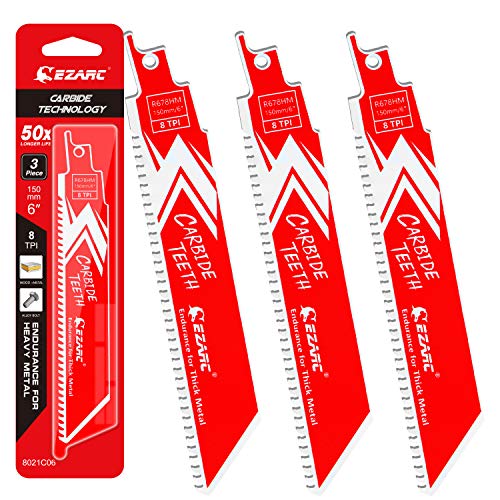
The EZARC R678HM Endurance is designed for thick metal cutting, offering up to 50x longer life than standard bi-metal blades. Its 8 TPI configuration is optimized for tough metal cuts, including high-alloy steels, stainless steels, rebar, and car beams. Carbide technology delivers easy cutting performance in scenarios where conventional blades falter, enabling faster progress in demolition or fabrication projects. Users can expect improved durability when cutting through hardened materials, with reduced blade breakage and less frequent blade changes on heavy-duty tasks.
EZARC R956HM Endurance for Hardwood and Metal

The EZARC R956HM is targeted at wood and metal demolition. Its 6 TPI blade is designed to handle tough materials by combining carbide durability with a geometry that reduces friction. This blade excels in demolition environments where both wood and metal are encountered in rapid succession. The carbide-tipped teeth provide extended life compared to standard blades, while maintaining predictable cutting performance through heavy-duty wood and alloy steel applications. The trade-off is typically a slower rate on metal-only tasks, but overall durability remains high in mixed materials.
Diablo Demo Demon 9″ Pruning and Wood
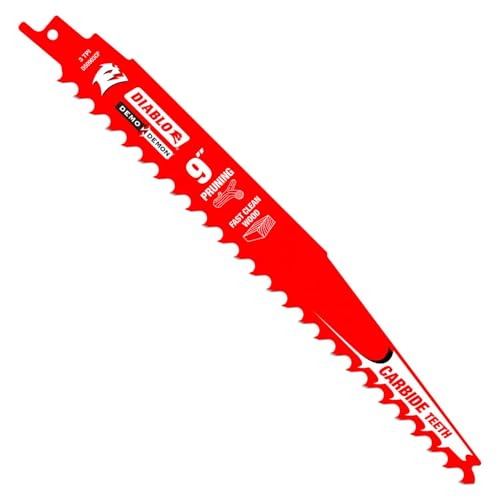
Diablo’s Demo Demon blade is built for pruning and clean wood tasks with a carbide tooth design that extends life up to 50x versus standard pruning blades. The 9″ length and 3 TPI configuration prioritize aggressive wood removal and fast cutting, especially in dense or diseased wood. A larger blade body supports stability in demanding pruning operations, while Perma-SHIELD non-stick coating reduces gumming, enhancing heat resistance and facilitating smoother cuts in tough timber conditions.
Diablo Steel Demon for Thick Metal

Diablo’s Steel Demon is designed for extreme metal cutting. This 6″ blade with 8 TPI delivers high performance against hard alloys, cast iron, and stainless steel. The ultra-hardened cutting edge, paired with TiCo Hi-Density carbide, offers up to 50x longer life than typical bi-metal blades in demanding metal cuts. A Perma-SHIELD non-stick coating helps resist heat buildup and gumming, supporting consistent performance in heavy metal demolition and fabrication tasks.
HARDWIN Carbide Reciprocating Saw Blade

The HARDWIN blade features 30x longer life due to premium carbide teeth and an 8 TPI pattern optimized for fast cuts in thick metals between 3/16″ and 9/16″. Its anti-binding wavy tooth design minimizes blade sticking and vibration during heavy metal cutting, while precision milled and individually welded teeth ensure consistent performance and durability. This blade is well-suited for rebar, steel beams, pipes, and other demanding metal cutting tasks, with reliable heat management under load.
Diablo Steel Demon DS0608CF

Diablo’s Steel Demon DS0608CF offers a high-performance carbide tip for extreme metal cutting needs. The 6″ length and 8 TPI combination targets demanding jobs where standard blades struggle with alloys, cast iron, or stainless steel. The advanced carbide edge provides enhanced longevity and cutting efficiency, while a robust blade construction supports consistent performance across repeated heavy-duty cycles. This blade is a strong choice for professional metal fabrication and demolition crews seeking durable, reliable cutting power.
Buying Guide: Carbide Reciprocating Saw Blades
- Material compatibility: For thick metal, choose blades with carbide tips and higher TPI (8 TPI) to reduce binding and wear. For mixed wood and metal demolition, blades with dual capabilities (like 6 TPI) can balance performance across materials.
- Blade life vs. cutting speed: Carbide tips dramatically extend blade life but may come at a higher upfront cost. Assess whether longer life or faster cuts best match your project profiles and downtime tolerance.
- Blade length and tooth design: Longer blades (e.g., 9″) provide deeper cuts and stability for aggressive tasks. Tooth geometry (flat, wavy, or tapered) affects cutting smoothness and heat generation; anti-stick coatings help in sticky materials.
- Heat management: Perma-SHIELD or similar non-stick coatings reduce gum buildup and heat, preserving blade integrity during prolonged cuts.
- Compatibility and shank size: Ensure the blade’s shank matches your reciprocating saw (most common is 1/2 inch). Some blades offer universal shank designs or flexible connections for a wider range of saws.
- Application focus: If your primary use is metal cutting, prioritize carbide-tipped blades with high wear resistance. For pruning or wood demolition, look for blades optimized for wood or mixed material cutting with carbide teeth for longevity.
- Cost versus task duration: While carbide blades cost more upfront, they can reduce overall project time by extending blade life and reducing breaks, especially on hard materials.
Selecting the right carbide reciprocating saw blade involves weighing material type, desired cut speed, and durability against project demands. The blades listed here represent a spectrum of applications—from hard metal cutting to pruning and demolition. For best results, match blade geometry and tooth count to the dominant material you encounter, and consider coatings and construction quality to minimize heat buildup and maintain performance through long work sessions.