Best 12-Inch Miter Saw Blades for Clean, Precise Crosscuts
Choosing the right 12-inch miter saw blade can dramatically improve cut quality, reduce chipping, and extend blade life. This guide highlights top 12-inch blades across a range of tooth counts and blade geometries, helping you find options for fine finish work, fast crosscuts, or heavy-duty framing. Each blade profile is evaluated for finish quality, durability, and alignment with common miter saw tasks in American workshops and job sites.
| Product | Brand | Tooth Count | Type |
|---|---|---|---|
| DEWALT DW3128P5 80-Tooth / 32-Tooth 12″ Crosscutting Blade Pack | DEWALT | 80 / 32 | Crosscutting / Fine Finish |
| DEWALT DWA112CMB Miter Saw Blade Combo Pack | DEWALT | 40 / 60 | Fine Finish / General Purpose |
| Freud LU91R012 Thin Kerf 12″ 72T Crosscutting Blade | Freud | 72 | Thin Kerf / High-Performance Crosscuts |
| DEWALT DWA112100 12″ 100-Tooth Fine Finish Blade | DEWALT | 100 | Fine Finish |
| FOXBC B0 100-Tooth Ultimate Polished Finish Blade | FOXBC | 100 | Polished Finish / Wood |
DEWALT DW3128P5 80-Tooth / 32-Tooth 12″ Blade Pack
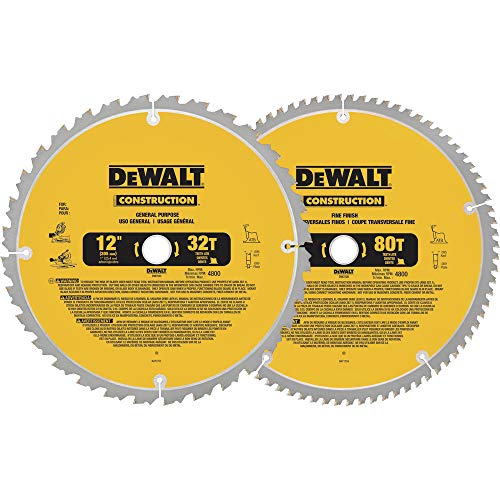
DEWALT’s DW3128P5 includes an 80-tooth crosscut blade and a 32-tooth blade in a 12-inch diameter. The high-tooth count is optimized for smooth, accurate crosscuts with fine finish quality on hardwoods and plywood. The dual-pack design offers versatility for different cutting tasks without swapping blades mid-project, and the included blades are carbide-tipped for durability and long service life.
DEWALT DWA112CMB 12” Blade Combo Pack

The DWA112CMB combo pack includes 40-tooth and 60-tooth blades designed for fine finish work and general-purpose cuts. With patented body slot design to reduce vibration, these blades help maintain accuracy during long cuts. The high-precision tooth geometry is aimed at improving cut quality and reducing tear-out on a variety of woods, including soft and hardwoods.
Freud LU91R012 Thin Kerf 72T Crosscutting Blade

This Freud blade features a negative 5-degree hook angle to prevent excessive aggression and improve workpiece control. The TiCo carbide blend delivers high durability and clean, precise finishes, while a thin kerf design minimizes material removal and power consumption. It’s suitable for light to medium-duty crosscuts and gives consistent results on hardwoods and softwoods alike.
DEWALT DWA112100 12″ 100-Tooth Fine Finish Blade

With 100 teeth, this blade is designed for ultra-smooth finishes on fine finishing tasks, such as veneered plywood, trim, and cabinetry components. The blade geometry emphasizes accuracy and minimal chipping, aided by a low-vibration body slot design. Suitable for precision cuts where edge quality matters most.
FOXBC 12 Inch 100-Tooth Ultimate Polished Finish Blade

FOXBC’s 100-tooth blade is designed to deliver an exceptionally smooth finish on wood, with a polished cut that closely resembles sanded surfaces. The 1-inch arbor and polished tooth geometry work together to minimize tear-out and produce a refined edge on joinery, trim, and fine woodworking projects. Suitable for high-precision finishing tasks in home shops and professional settings.
Buying Guide: Key Considerations For 12-Inch Miter Saw Blades
Blade selection depends on the material, desired finish, and cutting speed. Here are essential factors to weigh when choosing a 12-inch blade for miter saws:
- Tooth count and geometry: Higher tooth counts (e.g., 80–100) yield finer finishes but slower cutting. Lower tooth counts (40–60) remove material quickly and work well for framing. ATB (Alternate Top Bevel) and FTG (Flat-Top Grind) tooth shapes affect finish and durability on different woods.
- Material and coating: Carbide-tipped blades provide longer life and consistent cuts on hardwoods and plywood. TiCo and advanced carbide blends balance durability with edge retention.
- Kerf width: Thin-kerf blades require less power and produce less waste but can be more sensitive to blade drift. Standard kerf blades are robust for rugged jobs.
- Blade need: For fine finish work (trim, cabinets), opt for high-tooth blades with smooth finishes. For framing or rough cuts, a lower tooth count is often sufficient.
- Arbor compatibility: Ensure the blade’s arbor fits your saw (commonly 1 inch). Some blades offer adapters for different arbor sizes.
Durability and vibration control are also important. Blades with low-vibration body slots tend to stay truer in long cuts, improving overall accuracy. When selecting among brands, consider whether a blade pack provides flexibility for different project types without constant blade changes.
In sum, a blade with a higher tooth count and quality carbide can deliver superior finishes for cabinetry and fine woodworking, while more robust blades with a moderate tooth count are better suited to framing and rough cutting. The featured products cover a spectrum of finishes and purposes to help American shoppers find the best 12-inch miter saw blade for their needs without overstating capabilities.