Best Soft Start for Air Conditioners and RVs
Finding the right soft start kit can reduce inrush current, prevent voltage spikes, and extend the life of your air conditioner or heat pump. This guide highlights five leading soft start options designed for home, RV, and off-grid use. Each product is evaluated on compatibility, ease of installation, noise reduction, and operation with generators or solar power. Use the buying guide to compare setup needs, power requirements, and installation considerations to choose the best fit for your system.
| Product | Brand | Capacity / Use | Key Benefit |
|---|---|---|---|
| MICRO-AIR EasyStart Flex 398 | MICRO-AIR | Up to 6 tons (72,000 BTUs) | Generous compatibility; ideal for home and commercial use |
| MICRO-AIR EasyStart Breeze 399 | MICRO-AIR | RV ACs up to 13k–15k BTU | Compact, easy to install for RVs |
| SoftStartRV Soft Start for RV Air Conditioner | SoftStartRV By NetworkRV | Up to 36,000 BTUs, RV and off-grid use | Waterproof and versatile for generators and RVs |
| Coleman-Mach Soft Start Kit (MAXXAIR) | MAXXAIR | For Coleman-Mach 45000/47000/48000 series | Reduces start-up amperage by up to 75% |
| SpartanStart Soft Start Kit | Spartan Power | RV AC up to 20K BTU | Inverter/generator-friendly with pre-load feature |
MICRO-AIR EasyStart Flex 398

Features include advanced MicroAir technology with an installation kit. Designed for AC units up to 6 tons, it provides a controlled, gentle startup to reduce mechanical stress and extend system lifespan. The kit is suitable for home and commercial applications and works with generators and inverters. It reduces startup current by up to 75%, enhancing performance in unstable power environments.
MICRO-AIR EasyStart Breeze 399
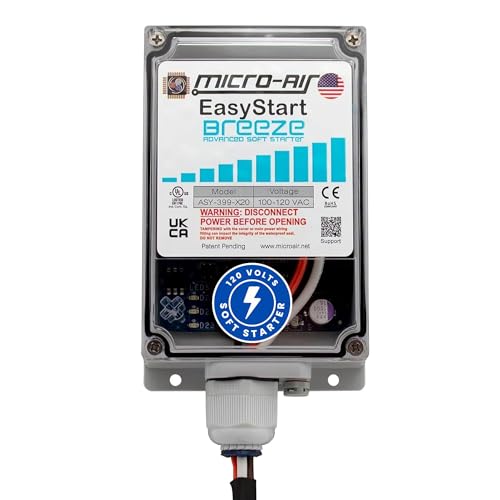
Designed for RV air conditioners, the Breeze 399 supports 13k–15k BTU units and works with a 2200-watt generator. It can power two A/C units on a 30-amp circuit and reduces startup noise for a quieter environment. Its compact design simplifies installation and space usage in RV setups.
SoftStartRV Soft Start For RV Air Conditioner
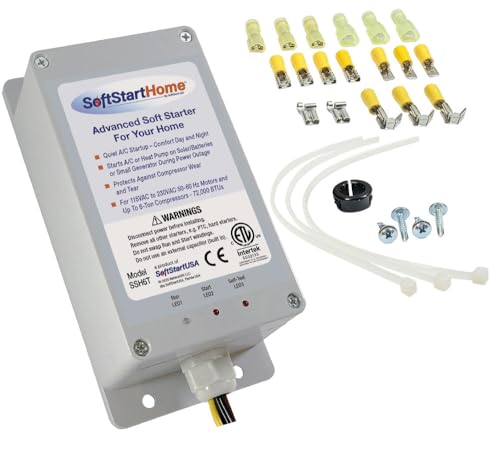
SoftStartRV emphasizes off-grid reliability with waterproof design and compatibility with generators, RVs, and solar setups. It reduces startup current by up to 70%, minimizes noise and vibration, and supports operation on limited power sources. The kit is suitable for multi-appliance setups in small living spaces such as RVs and campers.
Coleman-Mach Soft Start Kit (MAXXAIR)
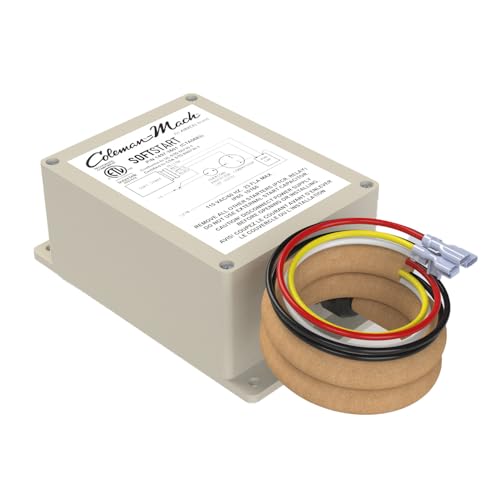
MAXXAIR’s soft start for Coleman-Mach air conditioners reduces start-up amperage by up to 75%. It uses a ramped power draw at startup, smoothing the transition to running voltage and protecting the compressor. The unibody enclosure provides weather-resistant protection, and installation can be performed from the exterior of the coach.
SpartanStart Soft Start Kit

SpartanStart is designed to reduce strain on RV air conditioners up to 20,000 BTU. It works with generators and inverters without draining battery power, featuring generator anti-stall, preload, and easy installation with included connectors and mounting aids. It aims to provide seamless switching between power sources for RV users.
Buying Guide: Key Purchase Considerations
- System compatibility: Confirm your AC unit’s tonnage, BTU rating, and whether you need RV-specific or home-use soft starts. Some models target up to 6 tons, while RV options cover smaller or specific BTU ranges.
- Power source compatibility: Evaluate whether you will run on generators, inverters, solar, or shore power. Choose a kit that supports your primary energy source and, if possible, multiple sources for flexibility.
- Startup current reduction: Look for stated inrush current reduction percentages. Higher reductions generally mean smoother starts and less electrical stress on components.
- Noise and vibration: Quieter start-ups improve comfort in RVs and living spaces. Consider models with noted noise reductions and smoother ramping profiles.
- Installation and maintenance: Consider whether the kit includes an installation kit, weatherproof enclosures, and exterior-access installation. Check for compatibility with existing ductwork or outdoor condenser configurations.
- Durability and environmental tolerance: For outdoor installations, select kits with weather-resistant enclosures and sealed designs to withstand temperature swings and moisture.
- Multi-appliance and multi-unit support: If you operate more than one A/C or appliances simultaneously, verify whether the kit can handle multiple loads or requires multiple units.
- Warranty and support: Review manufacturer warranties and whether there is customer support available for RV and off-grid environments.
Overall, selecting a soft start kit involves balancing capacity, installation complexity, and energy source compatibility. Home users may prioritize higher capacity and robust installation kits, while RV owners often need compact, waterproof solutions that work with generators and limited shore power. For off-grid setups, prioritize models with strong startup current reduction and reliable performance with solar or generator power.